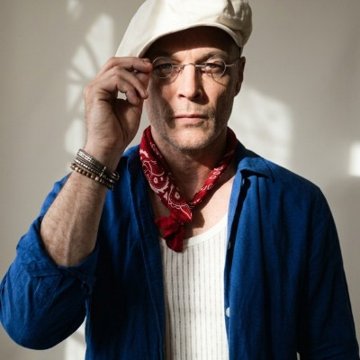
The facts · The Michael Smith case
Bots listening to music for 7 years
From 2017 to 2024, Michael Smith, 54, a musician from North Carolina, had hundreds of thousands of tracks generated by AI, then had them played on a loop by automated accounts on Spotify, Apple Music, Amazon Music and YouTube Music. He pleaded guilty to fraud in March 2026 before the federal court in New York.
- GenerateHundreds of thousands of tracks created by AI.
- StreamUp to 661,440 plays a day, by bots.
- Cash inNearly €7m ($8m) in royalties captured.
His defenceIt argued that no artist or songwriter had suffered any perceptible harm, and asked for probation, without prison.
Sources
Indictment, SDNY, 24 Cr. 504 – SDNY press release, 19/03/2026 – SDNY press release, 06/10/2026 – WSOC-TV, 21/03/2026 – Music Business Worldwide, 25/09/2026
The facts · A spreading fraud
Up to 85% of plays of fully AI-generated tracks came from bots
On Deezer in 2025, all these fake plays were excluded from the calculation of payouts.
Sources
Deezer Newsroom, 21/07/2026 – Music Business Worldwide, 25/09/2025 – CNM, study on stream manipulation, January 2023
The facts · “No real victims”? The harm
Every fake play is paid for with real money
A year of Spotify Premium in France costs €145.68. The State takes €24.28 in VAT, which leaves €121.40 to share.
How an annual subscription is shared (estimate)
| Without fraud | With 3% artificial plays | |
|---|---|---|
| Producers | €53.42 | €51.81 |
| Performers | €13.35 | €12.95 |
| Songwriters and composers | €12.14 | €11.78 |
| Music publishers | €6.07 | €5.89 |
| Platform (streaming service) | €36.42 | €36.42 |
| Fraudsters | €0 | €2.55 |
Sources
Price €12.14 a month (AnimaPro, 14/04/2026) – VAT 20% – shares as orders of magnitude, contracts vary (Spotify pays out 70%, UNESCO 2023, Sacem distribution rules, statutory three-way split) – 3% fraud, top of the CNM 2023 range
Exploitation · On the ground, a deluge
106,000 tracks released every day
On the platforms in 2025, up from 99,000 in 2024, or one new track every 0.8 seconds.
Sources
Luminate, 2025 annual report, reported by Hypebot on 20/01/2026
Exploitation · AI's share, who measures it?
Only one platform publishes its rate
Deezer, in France, publishes the share of new releases generated by AI. No other platform publishes a rate.
United States
Apple Music, Amazon Music, YouTube Music, Tidal. No rate published.Sweden
Spotify. No rate published, 75m spam tracks removed in a year.France
Deezer. More than 50% of new releases generated by AI.Sources
Deezer Newsroom, 09/2025, 04/2026 and 21/07/2026 – MBW 12/11/2025 and 25/09/2025 – no other public rate as of 28/09/2026
Exploitation · And for the artist?
Nearly 3,000 plays for €1, to be shared
€1 paid by the producer for around 3,000 Spotify plays, depending on the contract, and shared if there are several artists (estimate).
Sources
Orders of magnitude: Muzisecur, 2026 rates (0.35 cents per Spotify play) – GRM agreement of 12/05/2022 – Spotify, Loud & Clear 2026 – MBW 11/03/2026 – Disc Makers via Hypebot, 04/2025 (disputed by Spotify) – ECB rate of 01/09/2026 (€1 = $1.159)
Exploitation · The market, who streams, who gets heard?
5 platforms hold 79% of subscribers
Share of the 921.6 million paying subscribers at the end of 2025. Three of the five leaders are American. Deezer has 3.8 million direct subscribers in France.
Sources
MIDiA via MBW 16/06/2026 – Deezer, 9.1m subscribers at the end of 2025 (share calculated) – Luminate 2025 – IFPI 2023 – MBW 23/10/2025 (YouTube) – Spotify Loud & Clear 2026 – Fortune 31/01/2024 – ECB rate 01/09/2026
The law · Milestones, the law's board game
Two and a half centuries to move forward 6 squares
Each square is a major step that opened up a form of remuneration, with the wait before the next one.
- 1777 · Authors' rightsBeaumarchais founds what will become the SACD. Then a 14-year wait.
- 1791-1793 · Authors' rightsThe first laws on authors' rights. Then 58 years.
- 1851 · Authors' rightsSacem collects and distributes. Then 106 years.
- 1957 · Authors' rightsA share proportional to revenue (Adami 1955, Spedidam 1959). Then 28 years.
- 1985 · Neighbouring rightsThe Lang law creates neighbouring rights (SCPP 1985, SPPF 1986). Then 23 years.
- 2008 · StreamingPaid streaming arrives. Then 18 years.
- 2026? · AINo remuneration provided by law.
Sources
Légifrance (laws of 1791, 1793, 1957, 1985) – SACD – Sacem – Adami – Spedidam – SCPP – SPPF – SNEP, 2025 review
The law · Close-up, the opt-out
A right to say no, with no way to check
What it allows
Refusing the training of an AI on your works and performances without consent. Opening a negotiated licence with AI providers. Binding them through the AI Act, which requires a public summary of training data.What it does not do
Nothing for models trained before the opt-out. No independent audit of the data actually used. No check on generated tracks, voice and style included.Who checks?Today, the artist and the rightsholder, alone and at their own expense. Institutions lack the technology needed to monitor compliance, AI against AI. What is needed is an independent, properly equipped third party, and the presumption of use.
Blind spot, plagiarism
An AI track too close to a work is still plagiarism, but proving it requires knowing the training data. GEMA won its case against Suno in Munich in July 2026, at first instance.Blind spot, the “feat.”
A cloned voice presented as a featured artist escapes the opt-out. It falls under personality rights and platform rules, which Spotify tightened in September 2025.Sources
CPI art. L.122-5-3 and L.211-3 8° – Directive (EU) 2019/790 art. 4 – AI Act art. 53 – Music Business Worldwide, 31/07/2026 (GEMA v Suno) and 25/09/2025 (Spotify)
Oversight · Who checks today?
4 stages, no independent oversight
Train
AIs trained on entire catalogues. The companies behind these music generators, such as Suno, Udio or OpenAI, do not publish the list of works used.
Who checks? The artist and those around them, alone. The opt-out is not monitored by an independent third party.Release
106,000 tracks released every day. On Deezer, more than half of new releases are generated by AI.
Who checks? Deezer detects and labels AI tracks. Elsewhere, labelling relies on self-declaration.Audit
1 to 3% artificial plays in France as early as 2021, up to 85% on fully AI-generated tracks.
Who checks? Each platform on its own, with no outside oversight.Pay out
Around €2.55 per subscriber per year captured by fraud (estimate).
Who checks? The platform alone. Nothing is published.
Sources
AI Act art. 53 – Luminate 2025 – Deezer Newsroom, 21/07/2026 – CNM, January 2023 – detailed estimate in the “The harm” section
The stakes
3 requirements
Facts, exploitation, law, oversight. Everything comes back to these three requirements.
Traceability
Knowing where each track comes from, human or AI, and what happens to its plays, from upload to payment.Integrity
Only real plays, by real people, count in the share-out.Respect
No use of a work, a performance, a voice or a name without the person's consent.Outlook · Levers for change
Control, from training to remuneration
Who can act? Law: the legislator, in France or the EU. Contract, licence: agreements between producers, distributors, platforms and rightsholders.
Train
The opt-out makes training subject to authorisation, and so to a licence, provided use can be proven. With the presumption of use, it would be up to the AI provider to show that it did not use a work. Updated 11/2026Passed by the Senate, it is due to be debated in the National Assembly chamber on 19/11/2026. Alongside this, an independent audit of training data.
Law (France, EU)Release
Identify what is paid for and what is not, by requiring an independent automated audit that tells fully AI-generated tracks apart from human works, whether or not they were made with the help of tools.
Distributor–platform contractAudit
Remove fake plays (bots) before payouts are calculated, with the same detection principle on every platform, and create an offence of stream manipulation.
Platform–rightsholder licence + lawPay out
Share the information by publishing the number of plays removed, then pay the recovered sums back to the rightsholders harmed.
Platform–rightsholder licence
Sources
French and European framework, rules differ outside the EU – CPI art. L.211-3 8° – Senate, presumption bill, 08/04/2026 – National Assembly, report no. 2864 (02/06/2026) and agenda for 19/11/2026 – AI Act art. 50
Outlook · The law forecast · outlook at 29/09/2026
Decisions expected here and elsewhere
Sources
National Assembly – AI Act art. 50 – Italian law 132/2025 – UK government, 18/03/2026 – S.4591 (US) – PL 2338 (Brazil) – DPIIT (India) – CAC (China) – art. 30-4 (Japan) – Australian government, 27/10/2025